Rynek Underground
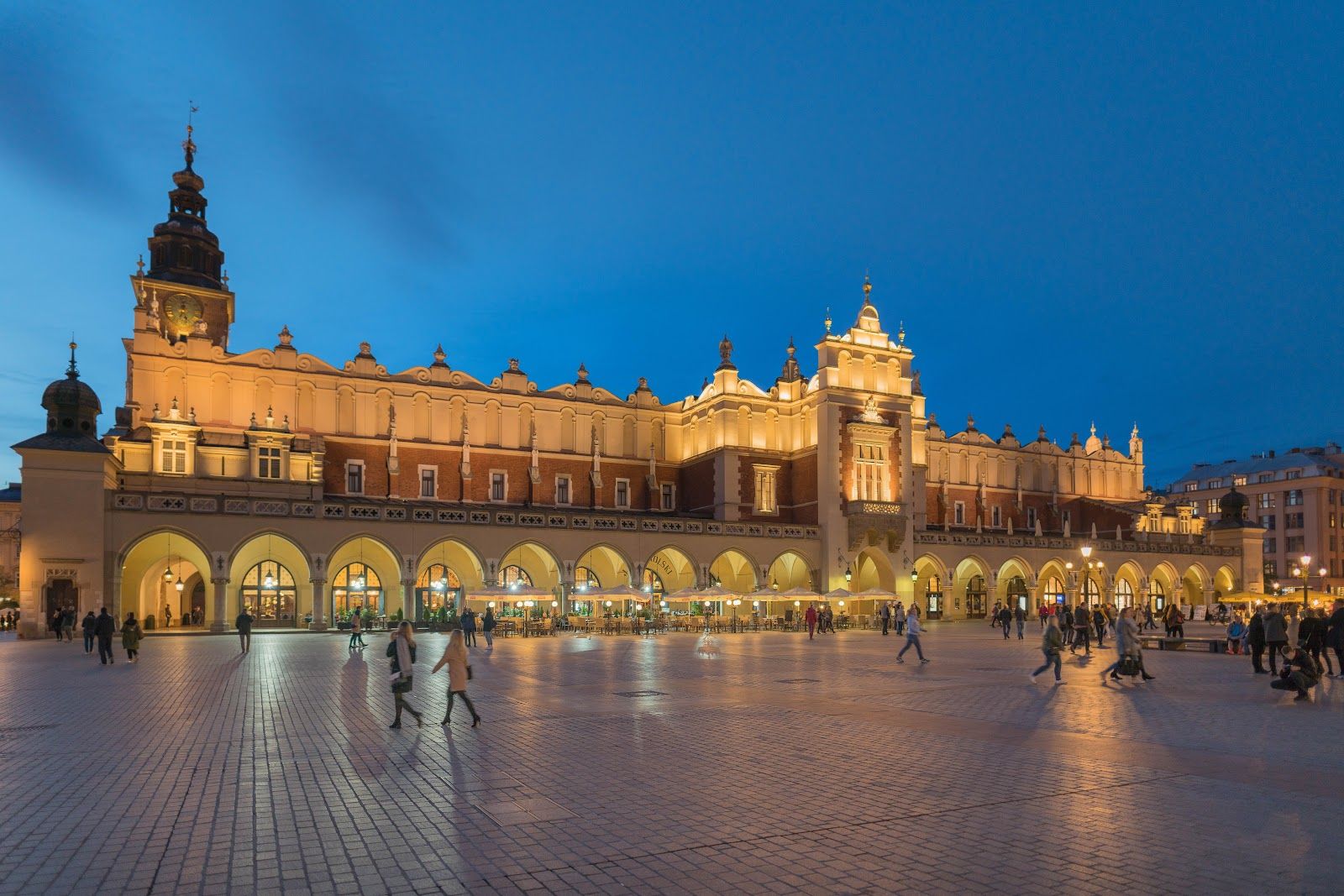
Rynek Underground is the archaeological reserve under Kraków’s Main Market Square, opened on 24 September 2010 after digs that ran from 2005 to 2010. The English exhibition page puts the reserve at nearly 4,000 square metres. The route walks the cellars of the Bolesław stalls, the Rich stalls, the Great Scales and the Cloth Hall.
What the dig left under the square
The Museum of Kraków opened the tourist route “Following the traces of European identity of Kraków” on 24 September 2010. The digs that made it possible ran without a break from 2005 to 2010 on the eastern side of the Main Market Square. The English exhibition page calls the result an archaeological reserve of nearly 4,000 square metres under the square. A Polish exhibition text on the same museum puts the display at about 3,400 square metres and says that by 2020 almost 4,000,000 people had come. The two figures are both on the museum’s sites. The reserve is a few metres down, between the Cloth Hall and St Mary’s, on ground where the Market Square was laid out in 1257.
Before that charter the museum’s Polish text says the site held a cemetery from the 10th century and then an open settlement of craftsmen, destroyed by the Mongols in 1241. The burnt remains of that settlement are on the route. So are the relics of medieval buildings and the foundations of the Cloth Hall. Objects in cases, all found on the square, include tools, jewellery, toys, shoes, weapons, coins, merchant seals and weights, bone combs and dress ornaments. Outside the cases the museum shows cuts through the historical soil, pieces of medieval road, and a relic of the settlement from the first decades of the 13th century. Named objects include a silver denarius of Władysław Łokietek from the early 14th century with St Stanislaus on it, a silk purse from the 14th century, a lead “loaf” of almost 700 kilograms, given on the English page as 693 kilograms, a knife handle carved as a human figure from the turn of the 13th and 14th centuries, a coin from Armenia that reached 12th-century Kraków, an 11th-century pendant and cross from Byzantium found in one grave of the 11th-century cemetery, and a plaque with an ancient Medusa that once sat on a cloak or a head covering.
How the route is built
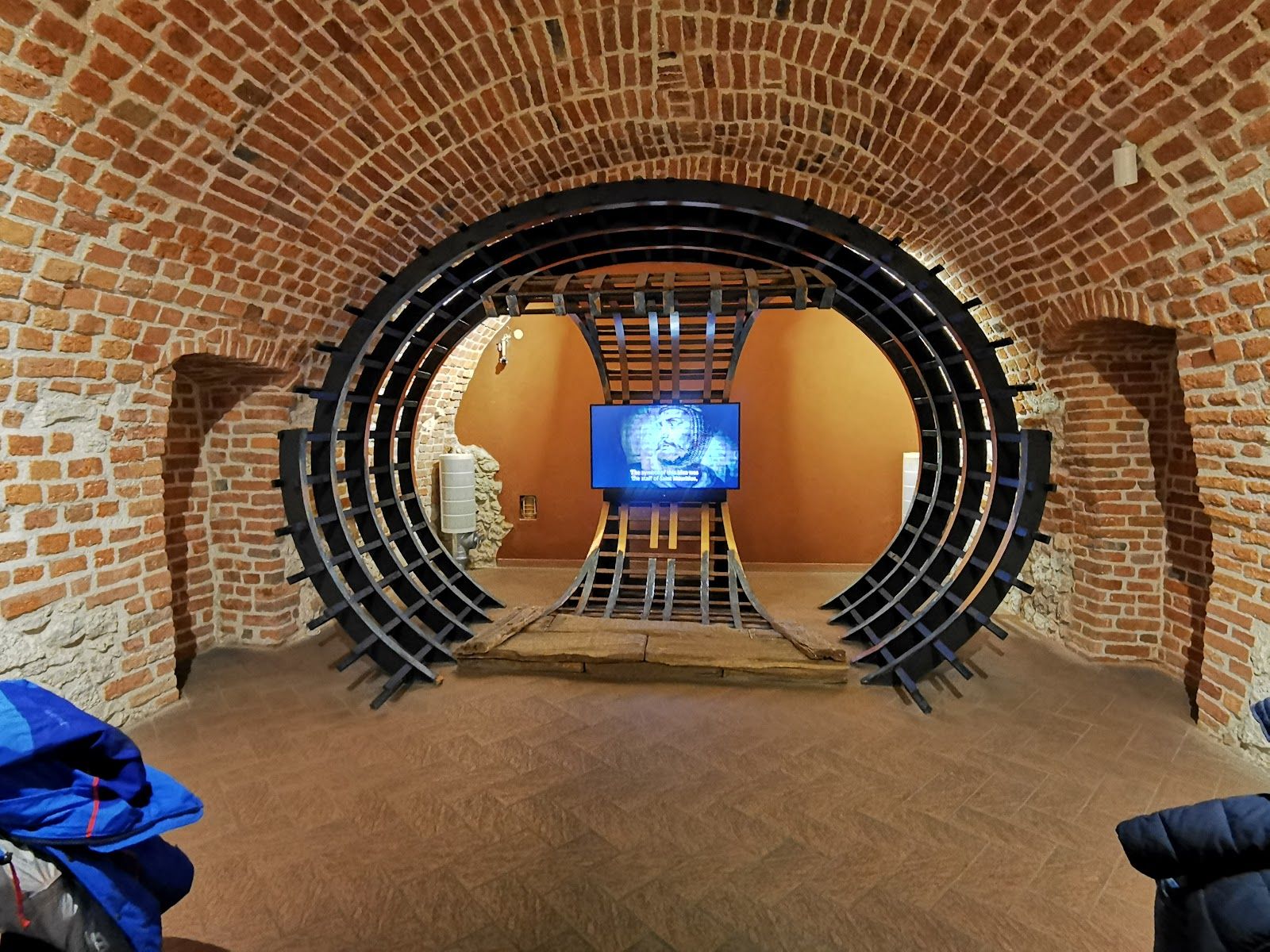
The English page says the path runs between the stone and brick walls of the cellars of former trading sites: the Kramy Bolesławowe, the Kramy Bogate, the Great Scales and the Cloth Hall. Stretches of transport routes are kept so the medieval road construction can be seen. Untouched layers in an archaeological section show how the surface of the square has risen. The display is also about Kraków’s trade with medieval Europe and about the city’s place in the Hanseatic League. The objects named there include 14th-century coins, decorations and pottery, Tartar arrowheads, and beads and medallions from the Orient. Reconstructions of 11th-century burials stand for the oldest use of the ground. Foundations of cottages from the late 12th and early 13th century, and reconstructions of a goldsmith’s workshop and a blacksmith’s workshop, stand for the pre-charter settlement destroyed in the Tartar raid of 1241.
The Polish text adds the devices on the route: a steam curtain at the start, a multimedia tale with moving figures of the legendary prince Krak and the dragon, a small theatre of sliding coloured pictures, portraits of monarchs, models of the reach of Kraków’s merchants and of the city around 1500, models of the Great Scales and of St Mary’s in two building phases, and a model of the rurmus, a piece of the old municipal water supply. Visitors can weigh themselves and measure their height in medieval units. A two-wheeled cloth wagon is rebuilt at full size, and so are workshops chosen from the 12th-century open settlement. Touchscreens, holograms, projections and films sit in cellars under the Cloth Hall. A playroom and a mechanical theatre of the old legend were made for children. Sound is part of the route. The branch can also be visited inside the museum’s “Medieval Kraków” tour. The manager named on the branch page is Łukasz Walas. The address is Rynek Główny 1.
FAQ
Is the underground route step-free, and which bus stops on the square?
The branch and exhibition pages do not describe a lift, a step-free route or an assistance-dog rule, and they do not name a bus line or a walking time. The address is Rynek Główny 1, 31-042 Kraków. The visitor centre is 12 426 50 60, info@muzeumkrakowa.pl. School bookings use rynek@muzeumkrakowa.pl.
What are the hours, and when is entry free?
Monday 10:00–19:00, except the second Monday of the month, when the branch is closed. Tuesday 10:00–15:00. Wednesday and Thursday 10:00–19:00. Friday to Sunday 10:00–20:00. Last entry is 75 minutes before closing. Tuesday is free. Those tickets are not reserved ahead. They are sold at the desk that day, the number is limited, and one person may pick up 5.
What does the ticket cost on other days?
The branch page lists PLN 45 normal and PLN 35 reduced. The route can also be taken as part of the museum’s Medieval Kraków tour. The museum can close the branch or shorten the hours. Check the closure list on the branch page before a November or December visit. Dates already posted include 1 November and 24 and 25 December.