
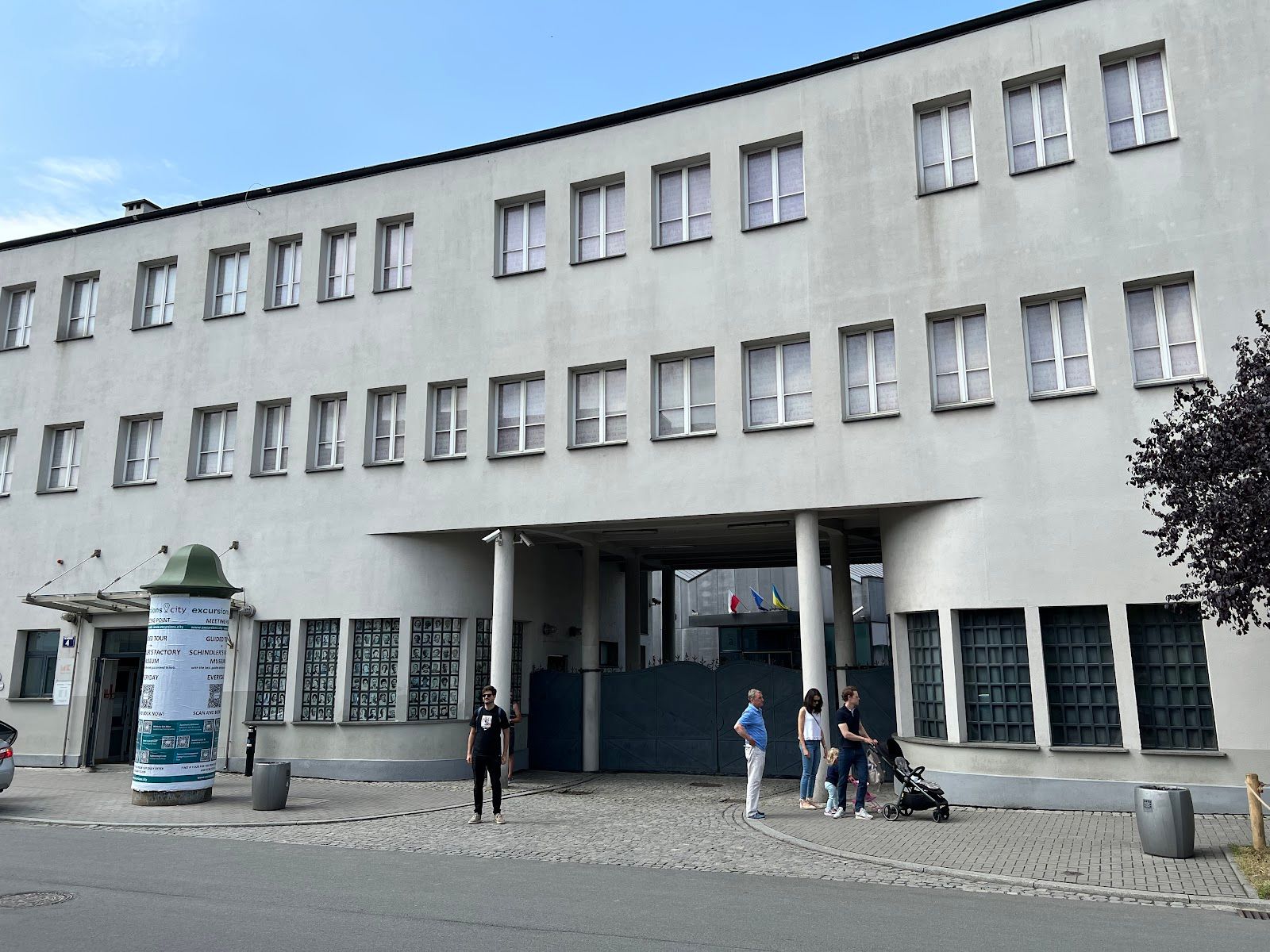
Oskar Schindler's Enamel Factory
The Museum of Kraków exhibition Kraków under Nazi Occupation 1939–1945 fills the former office building of Deutsche Emailwarenfabrik at Lipowa 4. German forces entered the city on 6 September 1939. The route is 45 rooms, and Schindler’s preserved office holds the Survivors’ Ark, made from thousands of enamelled pots.
A city exhibition inside the factory office
The permanent exhibition sits in the former administrative building of Oskar Schindler’s enamel factory at ul. Lipowa 4, 30-702 Kraków, in Zabłocie. The museum’s own description treats it first as a story of Kraków and of its Polish and Jewish inhabitants in the Second World War, and also as a story of the Nazi German occupiers who arrived on 6 September 1939. The wartime history of Deutsche Emailwarenfabrik, DEF, and of its owner was pulled into public view in 1993 by Steven Spielberg’s film Schindler’s List. The exhibition page says visitors come to the place where Schindler saved the lives of over a thousand people. His story, and the stories of the Kraków Jews he saved, are set inside the city’s wartime history rather than standing apart from it.
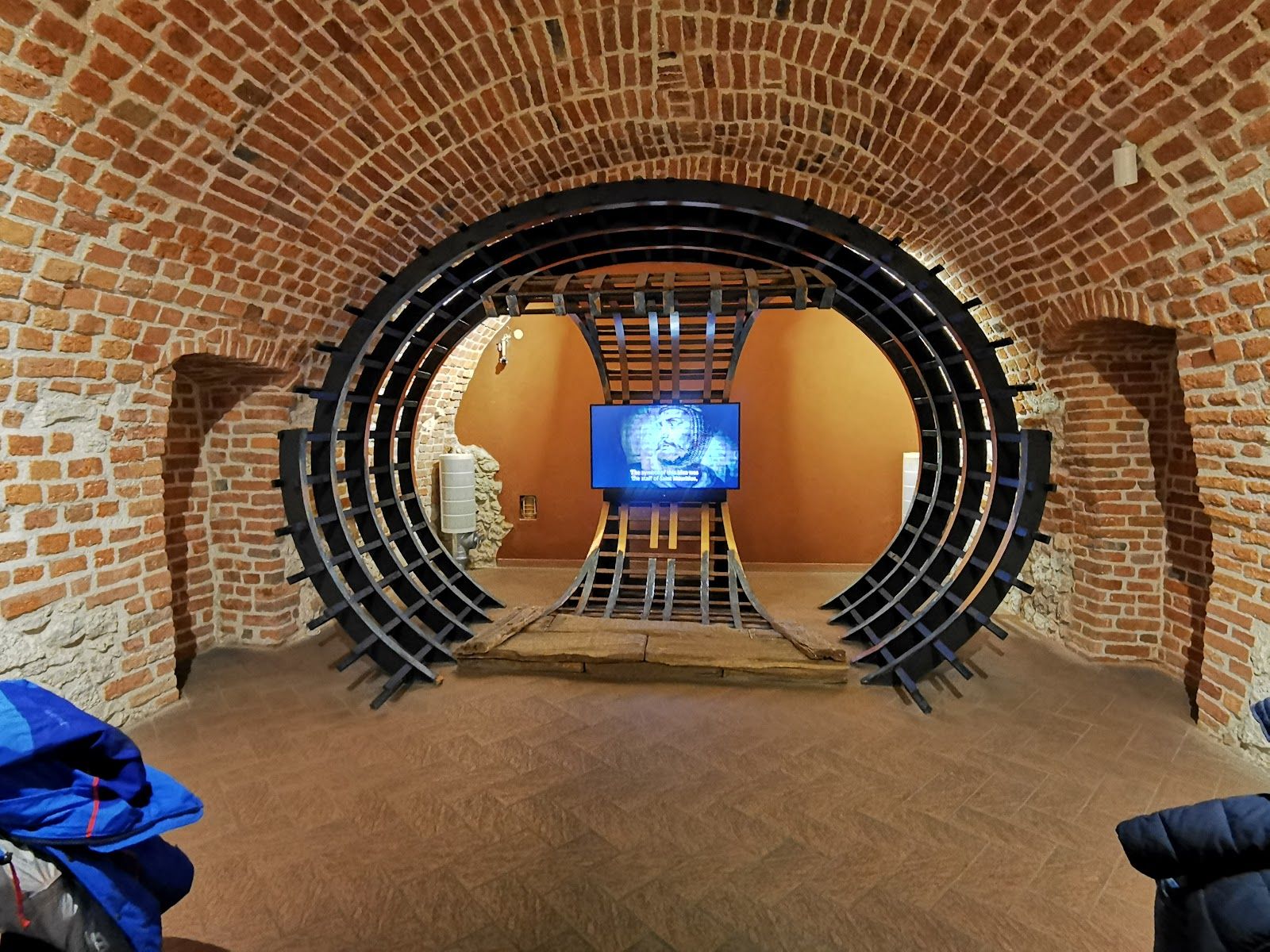
The scenario team was Katarzyna Zimmerer, Grzegorz Jeżowski, Edyta Gawron and Barbara Zbroja, led by curator Monika Bednarek. They built the narrative from documentary photographs, eyewitness accounts, documentary films and multimedia. Everyday life in occupied Kraków is carried by ordinary objects, photographs, newspapers, and personal and official documents. Stage designer Michał Urban and theatre director Łukasz Czuj gave the layout the character of a theatrical and film narrative: reconstructions of city space set against sculptural installations. The motto of the exhibition and of this branch of the Historical Museum of the City of Kraków is “the factory of memory.” Honorary patronage was taken by the Ambassador of Israel to Poland, Zvi Rav-Ner, the Ambassador of Germany to Poland, Michael H. Gerdts, the Consul General of the United States, Allen Greenberg, and the Minister of Culture and National Heritage, Bogdan Zdrojewski.
The walk through the 45 rooms
The route is chronological. It goes down cobbled streets into a photographer’s shop, then to an authentic stereoscope from a pre-war studio on ul. Szczepańska. A tram screens a documentary of city life on its windows. The ghetto is a tight labyrinth with a Jewish apartment inside it, and the route then moves with those residents to the camp at Płaszów. From a hairdresser’s window the exhibition shows the Polish underground attempt on Wilhelm Koppe. From a basement window it shows a street round-up. The last stretch is the fortified city waiting for the Red Army.
Five points in that history are marked by “memory machines,” stampers a visitor can use. Each stamp is tied to one event, and the museum calls the result a time document you take away. The closing installation is the Hall of Choices, a sculpture about ethical dilemmas and attitudes in the war. A workshop text on the branch page adds that a so-called white book and black book sit beside that hall. The whole exhibition uses 45 rooms, 30 interactive kiosks with touchscreens, 70 soundtracks and 15 video projectors.
The office that survived
Schindler’s former office is a historic room the museum says was preserved in the administrative building. The dominant object in it is the Survivors’ Ark, built from thousands of enamelled pots of the kind his workers made during the war. That room is the factory’s own object. The streets, the tram, the ghetto apartment and the camp are reconstructions and installations, not the original streets of Kraków moved indoors. The branch also lists a temporary exhibition, Fabryka Schindlera – historie miejsca, and study visits, beside the permanent occupation exhibition.
FAQ
Is there a lift, and where is the accessible toilet?
The exhibition is on several floors, reached by a lift. The cabin is 1.1 by 2.2 metres and the buttons are in Braille. The floor surface changes along the route. The ticket office is on the ground floor at the entrance, and the accessible toilet is on the ground floor beside it, as is the baby-changing table. There is no disabled parking. Assistance dogs are welcome. A Polish sign-language or signed-system interpreter can be arranged at Museum of Kraków branches if you ask ahead. Wi-Fi is in the ticket hall.
How do I get to Lipowa 4?
The factory is at ul. Lipowa 4, 30-702 Kraków, in Zabłocie. The accessibility statement says city transport that stops at Plac Bohaterów Getta or at the Zabłocie stop, then the rest on foot. It does not name a line.
Does one ticket cover other Museum of Kraków branches?
A Factory ticket also admits you to Eagle Pharmacy and to ul. Pomorska, within seven days of the date on the ticket, during those branches’ opening hours. Monday entry at the Factory is free, the number of tickets is limited, and they cannot be reserved ahead. The exception is schools, which reserve from an official school email to info@muzeumkrakowa.pl. Online tickets go on sale 90 days ahead, groups from 8:00 and individuals from 9:00.