
Krakus Mound
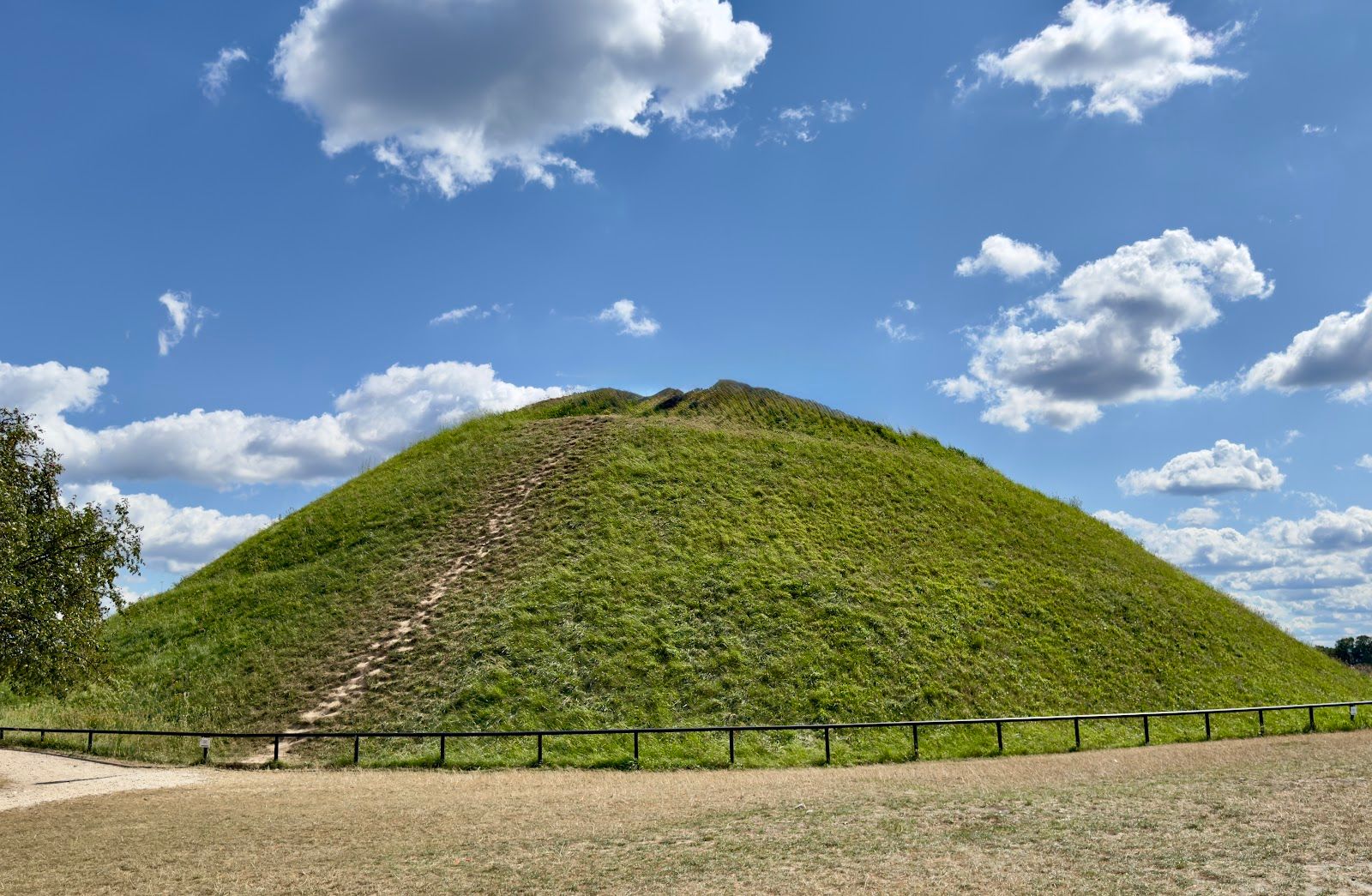
Krakus Mound stands on Krzemionki, near ul. Wielicka in Kraków. The city’s own place note says it was raised in the 7th century and is 16 metres high. The same note gives the legend that it is the grave of Prince Krak, the founder of Kraków, and puts it with Wanda’s mound as a site that was probably used for cult or as a watch post.
Sixteen metres on Krzemionki
The City of Kraków’s place page files Krakus Mound under “Kraków mounds” and gives the address as Kopiec Krakusa, Kraków. It locates the earthwork on Krzemionki, in the area of ul. Wielicka. Two measurements are the whole of the physical description: it was raised in the 7th century, and it is 16 metres high. The page does not give a diameter, a path length, or a stair count. It does not describe a ticket desk, a fence hour or a viewing platform with a railing. Those things are absent from the civic note, so they are absent here.
The legend, printed as legend, is that the mound is the grave of Prince Krak, the founder of Kraków. The next sentence is the city’s own caution. Like Wanda’s mound, it was probably a cult place or a watch post. The word is “przypuszczalnie”, presumably. The page does not choose between the grave story and the cult-or-watch reading. It puts both in front of the reader and marks the second as a presumption shared with Wanda’s mound. That pairing is the only comparison the city makes. It does not on this page describe the Kościuszko Mound, which is a different monument, built much later, and already has its own guide.
What the city published, and what it did not
The record was published on 10 September 2021 by Monika Jagiełło, for the Social Communication Department of the City of Kraków. The category is “Kraków mounds”, which is how the city files this earthwork with the others rather than as a park or a church. The category link groups it with the other Kraków mounds rather than with parks or with churches. There is no operator named, no phone, and no seasonal opening. Google shows two cards in the same ground. The historical-landmark card is the one used for this page. A second card, typed as a mountain peak and titled Kopiec Krakusa, carries a separate rating and is not added to this one.
A visit, on the strength of the civic text alone, is the earthwork on Krzemionki by ul. Wielicka: 16 metres, a 7th-century date, a foundation legend the city repeats and does not certify, and a presumption, shared with Wanda’s mound, that the form served cult or a lookout. Anything beyond that, a festival, a path surface, a view list, belongs on a page the city has not put under this entry. The Municipal Greenery Authority’s general brief covers parks, forests other than Las Wolski, small squares, housing green, roadside green and the Vistula boulevards. It does not, on the page that sets out those duties, name Krakus Mound. Until a mound-specific city page adds to it, the 2021 note is the description.
FAQ
Is there a step-free path, and which bus stops at the mound?
The city place page does not describe a path, a lift or a step-free route, and it does not name a bus line, a stop or a walking time. It places the mound on Krzemionki, near ul. Wielicka. The address line is Kopiec Krakusa, Kraków.
Is there a ticket or a closing time?
The 2021 city note does not print a ticket price or opening hours. It gives the height as 16 metres and the date as the 7th century. There is no phone on the page. The publisher is the Social Communication Department, and the publication date is 10 September 2021.
Is this the grave of Krak?
The city prints that as legend: the mound is said to be the grave of Prince Krak, founder of Kraków. The same sentence says that, like Wanda’s mound, it was presumably a cult site or a watch post. The page does not present the grave story as a verified burial.