Krakow Zoo
Krakow Zoo opened on 6 July 1929 with 94 mammals, 98 birds and 12 reptiles. It now covers 20 hectares in Wolski Forest, with about 1,500 animals of over 270 species. Over 100 of those species are endangered.
From a pheasantry to 20 hectares
The push for a zoo in Wolski Forest started in 1926, with a place called the Bażantarnia. It held pheasants, other native birds, and herbivores, mostly roe deer and red deer. The animal park itself was then set on the highest and driest ground in the middle of the forest, land the army had used. Cages and aviaries took the first birds and the first four-legged animals. The gate opened to visitors on 6 July 1929. The stock that day was 94 mammals, 98 birds and 12 reptiles, and the anniversary account also names monkeys among the exotic animals.
In the Second World War the zoo was under German administration. Some animals were sent to zoos in Germany. Six adult wisents taken from Wolski Forest died in the bombing of the Berlin zoo. Antoni Koziarz ran the zoo from the start until 1966. In 1963 it became its own enterprise, the Municipal Park and Zoological Garden, and the rebuilding started. The first Indian elephant, Kinga, arrived in 1964. In 1970 the display added reptiles, amphibians and fish. In 1975 the grounds grew to 15 hectares. Dr Józef Skotnicki became director and began replacing yards, cages and shelters. The animals brought in then included pygmy hippos, addax, Nile lechwe and lechwe, Chapman's zebras, South American tapirs and white camels.
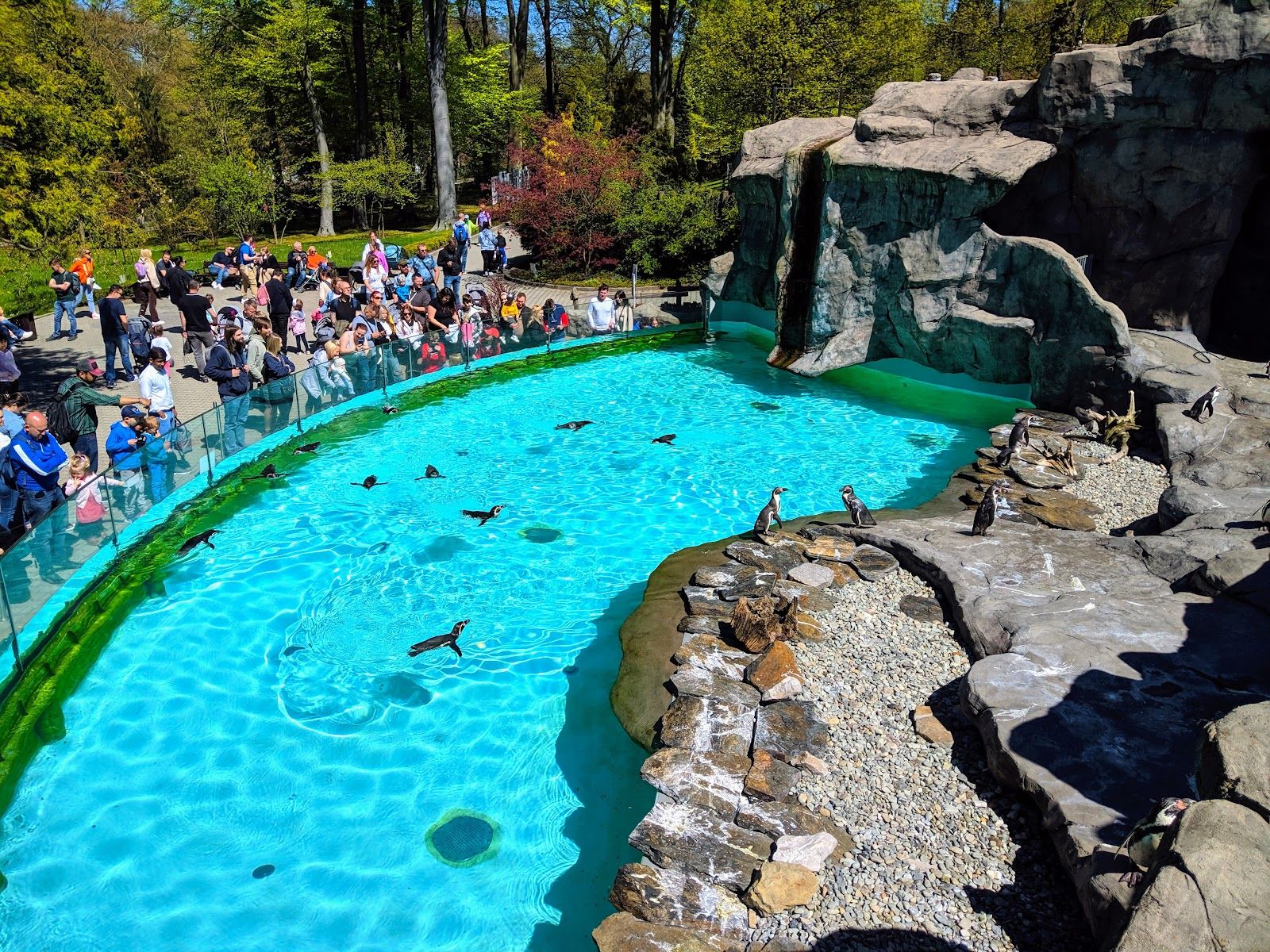
The later yards are dated on that same 2019 account. A modern monkey house opened in 2005. In 2007 a big-cat yard took tigers, snow leopards and Chinese leopards. In 2013 the giraffe house replaced the bison and kulan yards. Three years later the penguin house opened, with a pool of azure water. In 2017 a second big-cat yard opened, for lions and jaguars. The anniversary text, dated 24 June 2019, counted 1,494 animals and 271 species and described a mid-sized European zoo in international breeding programmes. The homepage now says about 1,500 animals, over 270 species, and over 100 species that are endangered. The hours page says about 270 species on the same 20 hectares.
What the catalogue still lists
The living list is published by group. Among the mammals on the first page of it: rock hyrax, Senegal bushbaby, North American porcupine, capybara, binturong, yellow mongoose, Arctic fox, kinkajou, roan antelope, sugar glider, Bennett's wallaby and Indian elephant. The fish page includes red-bellied piranha, lyretail anthias, electric yellow cichlid, yellowtail tang, regal blue tang and clownfish. Amphibians include the axolotl, mandarin salamander, mountain chicken, green-and-black, yellow-banded and dyeing poison frogs, striped poison frog, Oriental fire-bellied toad, red-eyed tree frog and tomato frog. Reptiles include the African spurred tortoise, McCord's snake-necked turtle, Fiji banded iguana, blue tree monitor, long-nosed snake, Pacific boa, red-footed tortoise, dwarf caiman, Philippine sailfin lizard, Madagascar giant day gecko and Mexican beaded lizard.
Birds on that list include the great curassow, Palawan peacock-pheasant, bar-headed goose, black-necked swan, Eurasian spoonbill, pied avocet, Nicobar pigeon, hyacinth macaw, galah, southern ground hornbill, Von der Decken's hornbill and red-billed blue magpie. The homepage also pictures a lion, a snowy owl, a giraffe, penguins, a siamang, a Ural owl, a Eurasian lynx, a Victoria crowned pigeon, meerkats and scarlet ibises, and it flags a new display inside the aviary. The director's note on the same pages treats the forest as part of the grounds: a coloured garden in spring, tree shade in summer, turning leaves in autumn, and air cleaner than the city centre in winter.
How to get there
Bus 134 leaves Cracovia Stadion and ends at the zoo gate.
FAQ
Is there a reduced fare for a disabled visitor?
Yes. A disabled visitor pays PLN 5. An accompanying caregiver must buy a reduced ticket. A marked car carrying a disabled visitor may use the parking by the gate all week, and that space is free. Ordinary cars may not enter Wolski Forest on free days and holidays, so the 35-space unguarded lot opposite the gate is Monday to Friday only.
Where is the other car park, and what does it cost?
Parking 2 is on Łysa Góra at ul. Kukułcza, about 1 km away, with 480 spaces, open daily. Weekdays are PLN 5 per started hour. Saturdays, Sundays, holidays and long weekends are PLN 25 for 5 hours, then PLN 5 per started hour. The Park and Ride ticket, gate 1, is PLN 32 for 5 hours and covers a return public-transport ride for up to 7 people between the Baba Jaga stop and the zoo. The zoo says the taxi stand on the square by Baba Jaga, near this car park, is illegal. Gate parking, when it is open, is PLN 30 for a car, PLN 40 for a minibus and PLN 80 for a coach.
Who pays the reduced ticket, and can I book ahead?
The reduced ticket covers children from the age of 3, primary-school pupils, full-time secondary pupils, students until they turn 26, and pensioners, plus the caregiver of a disabled person. Advance booking is not required. The office takes payment cards. There is no cash machine nearby. Tickets cannot be exchanged or refunded. Children from orphanages are not charged.